By Jenelle Etzel, January 26, 2026
There’s a moment early in this conversation where Alina Aliyar talks about how often people feel overwhelmed, not because they don’t know what they want, but because they haven’t had the space to say it out loud.
That idea sits at the center of her work.
Before real estate, Alina spent years in storytelling and coaching. What she learned there shows up clearly in how she works with clients now: when people are given permission to be honest about their hopes, fears, and uncertainties, clarity follows. Not immediately. Not perfectly. But meaningfully.
Starting with curiosity, not presentation
One of the themes that came up again and again was the difference between presenting and listening. Alina talks about how easy it is for agents to feel like they need to arrive with answers, frameworks, and polished explanations. Instead, she works from broad categories first — life, family, daily experience — and keeps asking questions.
How do you use this space?
What feels important right now?
What are you hoping for in the next chapter?
The goal isn’t efficiency for efficiency’s sake. It’s understanding. And often, the thing a client says they want at the beginning isn’t the thing they realize they need once they’re standing in the space itself.
Letting go of the story
When working with sellers in particular, Alina described the process of helping people step outside of their own story. A home carries memories, routines, and identity, but at a certain point, it needs to become accessible to someone else’s imagination.
That shift can be emotional.
Her role, as she describes it, is to help clients gently release their personal attachment just enough to see the home through another lens. To understand how the story changes when it’s no longer only yours. That process takes patience, honesty, and a willingness to sit with discomfort rather than rush past it.
Experience builds empathy
Alina also reflects on how her own life experiences shape the way she works. Moving across the country at different stages of life — as a newlywed, as a parent, with young children — taught her that the same process can feel radically different depending on context.
What felt manageable once can feel overwhelming later. What once seemed minor can suddenly matter deeply.
That perspective shows up most clearly when she works with families. Selling a home with small children isn’t just about preparing the house. It’s about planning where everyone will be during showings, how stress is managed, and how space is made for people to rest in the middle of a demanding process.
Being yourself is not unprofessional
Later in the conversation, Alina shares something many people quietly feel when starting out: the belief that professionalism requires sanding yourself down.
She talks about thinking she needed to be more formal, more restrained, more aligned with an idea of what she was “supposed” to be. Over time, she learned the opposite. The more comfortable she became in her own skin, the more effective her work became.
Clients weren’t responding to polish. They were responding to honesty.
Being open about uncertainty. Naming fear when it shows up. Allowing humor without minimizing seriousness. Creating space for people to say, “This is scaring me,” instead of burying it under politeness.
Showing up as a whole person
Throughout the episode, one idea keeps resurfacing: people want to work with someone real. Someone who listens. Someone who asks thoughtful questions and doesn’t pretend to have all the answers.
Authenticity, in this sense, isn’t about personality. It’s about presence. It’s about being willing to be both participant and witness, to ask for help when needed, and to rely on community and shared knowledge when things get complex.
That kind of work builds trust slowly and sustainably. And over time, it changes outcomes.
You can listen to the full conversation with Alina Aliyar in this episode of Open House: Everyday Excellence, where we explore storytelling, curiosity, and why being yourself isn’t just personal — it’s practical.

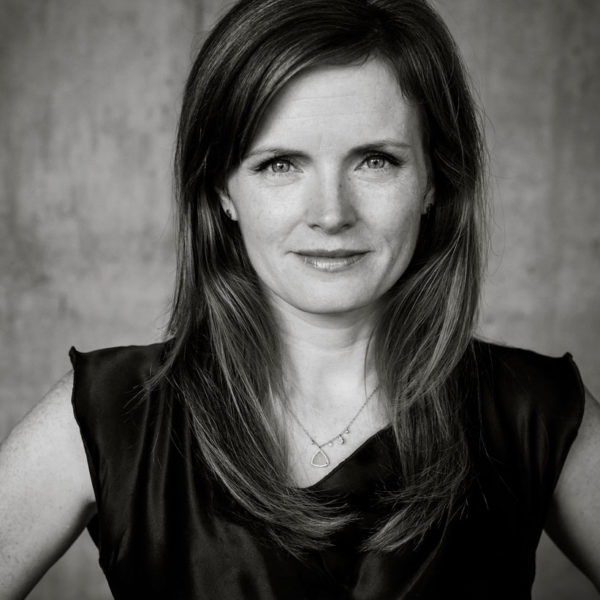
Jenelle Etzel
President & Owner, Licensed Broker OR
She/Her
What does being lead singer and guitar player in a female punk band have in common with starting a real estate company in the middle of a recession? Not many people can answer that question. But when you ask Jenelle Isaacson Etzel founder and CEO of Living Room Realty, there’s no hesitation; where most would see a chasm, she sees a bridge.
For Jenelle, it’s all been about finding a voice—the singular and irrepressible expression of self. Once a quiet, studious, high-school girl growing up in Portland, Jenelle started a punk band after college. She played guitar, wrote cathartic songs, performed, and traveled across country while living out of a van. All that seems light years from the present moment--owning a successful, growing company; serving on boards of civic and philanthropic organizations; enjoying family life with her two young daughters and long-time partner. Still, she uses the same voice now that began to emerge on stage years ago.
Whether it’s business or music, “It’s important to know what your voice is. If it’s true, it will resonate.” Jenelle’s voice, her truth, is about being brave enough to take action without apology, being heard without being exploited, to be energized, constantly problem-solving and refining her skills in the pursuit of building a purpose-driven company. All this requires risk-taking. She’s learned the hard way that she can’t fix everything and that not everyone will share her vision. But even as she explains the difficult choices she’s faced, Jenelle radiates joy.
“It’s never okay to play small,” she says with conviction. And this, more than anything, is what she strives to impart to other women, empowering them to pursue their passion whole-heartedly and to be leaders who speak with their own unique, unapologetic voice.
Living Room Realty, founded in 2009, offers residential, commercial, and property management services. Living Room ranks in the top 15 real estate companies in Oregon, with more than 110 affiliated broker-agents. For more information, visit www.livingroomre.com.
Noted Achievements: First west coast real estate office to receive B Corp status • Top Workplaces, 2014-2016 • 100 Best Workplaces in Oregon 2017 • 100 Best Green Companies 2017 • Oregon Business in Ethics Awards in 2014 • Jenelle has been featured in The Portland Monthly, Oregon Business, and REALTOR® Magazine • Portland Business Journal 40 under 40 Business Leaders • Board of Directors, Rock n Roll Camp for Girls, receiving 2015 award for creative philanthropy • Board Member, Entrepreneurs’ Organization Global Network, Portland chapter • Orchid Award recipient for Business and Civic Contributions • Guest speaker: OPB’s Think Out Loud, Investor Beat, Cascadia Green Building Council • Advocate speaking on behalf of Benefit Corporation legislation with Oregon Secretary of State, Kate Brown
Read More