
Fasten Your Seatbelts: My Experience on Portland’s Fair Housing Bus Tour

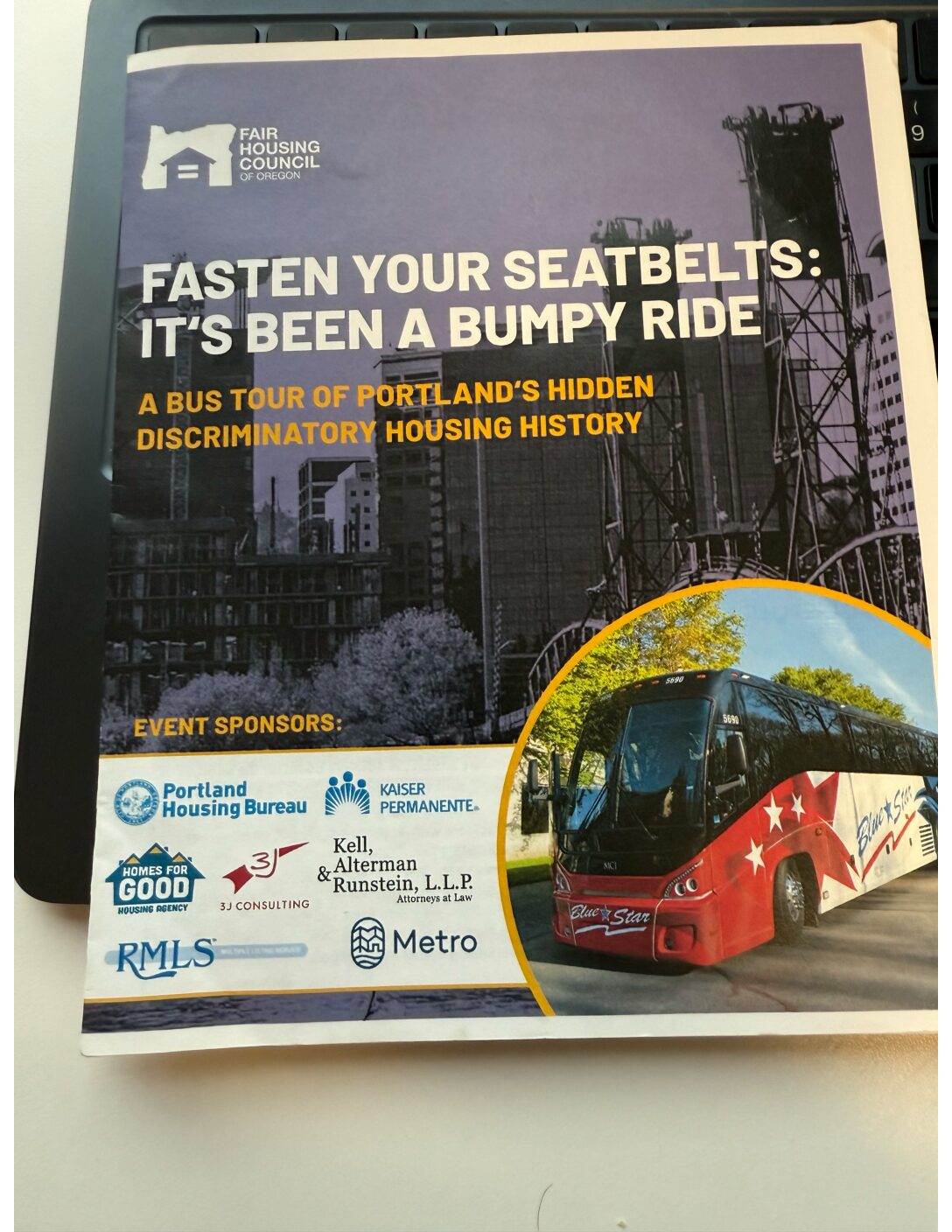
I recently joined the Fair Housing Bus Tour Portland, hosted by the Fair Housing Council of Oregon. This powerful tour explores Portland’s history of housing discrimination and the communities that fought for fairness and inclusion.

Portland’s hidden housing history—stories about exclusion, resilience, and progress.

It was more than an educational experience. It was emotional. I left with a deeper understanding of how Oregon’s past still shapes our neighborhoods today.

Beginning at the Dr. Martin Luther King Jr. Statue 🏛️

Our first stop on the Fair Housing Bus Tour Portland was the Dr. Martin Luther King Jr. statue outside the Oregon Convention Center. The monument depicts three figures: Dr. King, an immigrant worker, and a child. Together, they represent courage, unity, and the hope for equality.

Standing before the statue, I thought about the people who came to Oregon searching for opportunity. Many immigrants, workers, and families were met with laws that excluded them instead of welcoming them. Early Oregonians argued that housing was a “personal transaction” and that government shouldn’t interfere. Sadly, that belief created space for systemic housing discrimination that lasted generations.

From Albina to Montavilla: A City Divided 🏙️

Next, the Fair Housing Bus Tour Portland visited neighborhoods that were once separate towns — Albina, Montavilla, and others. Each area has a story of growth, loss, and resilience.

Albina once served as the heart of Portland’s Black community. Williams Avenue buzzed with Black-owned businesses, music venues, and cultural pride. By the 1990s, Albina’s population was about 75% Black. By 2020, it had dropped to 25%. Many families were pushed east to Gresham and East Portland, where sidewalks, grocery stores, and public services remain scarce.

Portland’s transformation tells a difficult truth. It’s now considered one of the most gentrified cities in the nation. Understanding how that happened is crucial if we want to build a more inclusive city.

The Bigger Picture: Land, Power, and Policy 🌎

The Fair Housing Bus Tour Portland also explained how government policy shaped who could own land. The Donation Land Act of 1850 gave white settlers millions of acres of Native land. Later, the Dawes Severalty Act of 1887forced Native families into individual ownership, which led to widespread land loss.

Even in the 1900s, injustice continued. Between the 1930s and 1960s, less than 2% of FHA loans went to nonwhite families. These policies prevented homeownership for thousands and deepened racial wealth gaps that still exist today.

The Golden West Hotel: A Symbol of Community and Pride 🏨

Another memorable stop on the Fair Housing Bus Tour Portland was the Golden West Hotel, once the largest Black-owned hotel on the West Coast. Located near Union Station, it gave Black travelers a safe place to stay during segregation.

The building still stands today, owned by Central City Concern, but its legacy runs deeper. Nearby stood Mount Olivet Baptist Church, which the Ku Klux Klan pushed to move out of downtown. These stories revealed how racism wasn’t only social — it was systemic and deliberate.

Hard Truths and Lessons Learned ⚖️

The tour continued to uncover painful chapters of history. At the Portland Expo Center, we learned it was once used as a Japanese American assembly center during World War II. Families, two-thirds of whom were U.S. citizens, were held there before being sent to internment camps.

We also discussed Portland’s Red Squad, a police unit that targeted activists, and the Silver Shirts, a local hate group modeled after Nazi Germany’s brownshirts. These facts were hard to hear but necessary to confront.

Hearing these stories, I was reminded of one quote from our guide:

“Every accusation is a confession.”
It spoke to the hypocrisy of discrimination — how fear often projects itself outward, targeting others to mask its own insecurity.

Connecting the Past to the Present 🌾

The Fair Housing Bus Tour Portland also highlighted how inequity reached beyond the city. During the 1970s, small family farms collapsed as big agriculture took over. Whether in rural or urban Oregon, communities with less power lost the most.

Writer William Faulkner once said, “The past isn’t even past.” After this tour, that quote felt more real than ever. Portland’s history lives in its streets, its housing, and its policies.

Why You Should Take This Tour ✊

This tour changed how I see my city. It connected history, policy, and humanity in a way that reading alone cannot. Whether you’re a local resident, a student, a business owner, or part of a community organization, this experience is worth taking.

Go as an individual or bring your company, team, or group. The conversations that follow will inspire awareness, empathy, and change.

Final Reflection

The Fair Housing Bus Tour Portland isn’t just about the past — it’s about our responsibility now. Learning these stories helps us understand why equity and fair housing matter today.

If you live in Oregon, I encourage you to take the tour. It will challenge you, inform you, and move you to think differently about what “home” truly means.

Contact me today! To read more about my expertise in East Portland check out my blog

Navigating Your Home Purchase: Who’s Who in a Real Estate Deal

Understanding the Key Players in Your Home Buying Journey

Buying a home involves several key players, each with a unique role. In this blog post, I’ll walk you through the major roles in a real estate transaction, what they do, and how they help ensure a smooth process. Whether you’re a first-time buyer or an experienced investor, understanding these roles will give you the confidence to navigate your home buying journey.

The Real Estate Agent: Your Project Manager

First and foremost is your real estate agent. Think of your agent as the project manager of your home buying process. Their job is to guide you from start to finish. Here’s what you can expect from your real estate agent:

  • Scheduling Tours: Arranging viewings for properties you’re interested in.
  • Determining Comps and Offer Strategy: Helping you understand the market value and craft a competitive offer.
  • Negotiating Deals: Working to get you the best terms possible.
  • Scheduling Inspections: Coordinating necessary inspections to ensure the property is in good condition.
  • Connecting with Contractors: Providing referrals for any needed repairs or renovations.
  • Resource Direction: Guiding you to tax or legal professionals as needed.

The Lender: Securing Your Mortgage

Next is the lender, who plays a crucial role in securing the financing for your home. They will:

  • Pre-Approval Process: Help determine how much you can borrow and identify suitable loan programs.
  • Document Collection: Request necessary documents to process your loan application.
  • Loan Processing: Guide you through the steps to secure your mortgage, providing clarity on your financial obligations.

It’s essential to work with a lender who communicates effectively and who you can trust. Poor communication can jeopardize your transaction.

The Escrow Officer or Title Company: Ensuring Neutrality

The escrow officer or title company acts as a neutral third party in the transaction. Their responsibilities include:

  • Holding Earnest Money: Managing the deposit you make when your offer is accepted.
  • Facilitating the Closing: Ensuring all paperwork is completed and funds are distributed correctly.
  • Providing Title Insurance: Protecting you against any title disputes.

Home Inspectors: Assessing Property Condition

Home inspectors are like the primary care doctors for your new home. They meticulously examine the property to identify any potential issues. Key tasks include:

  • Detailed Inspections: Checking structural integrity, plumbing, electrical systems, and more.
  • Referrals to Specialists: Suggesting further inspections if they find potential problems.

The Appraiser: Determining Home Value

Appraisers assess the value of the home to ensure the lender is not over-lending. They are a neutral third party and you won’t have much direct contact with them. Their role is crucial for:

  • Valuation: Ensuring the home’s value justifies the loan amount.
  • Risk Mitigation: Protecting the lender from overextending credit.

The Insurance Agent: Securing Home Insurance

Home insurance is mandatory when buying a home. An insurance agent will:

  • Policy Selection: Help you choose the right insurance policy for your home.
  • Bundling Options: Provide options to bundle home insurance with other policies for discounts.

Other Key Players

Additional roles that may come into play include:

  • Transaction Coordinators: Assist with paperwork and ensure everything runs smoothly.
  • Home Warranty Providers: Offer warranties to cover potential mechanical issues.
  • Contractors: Provide estimates and complete any necessary repairs or upgrades.

Conclusion

Understanding the roles of these key players in a real estate transaction can help you navigate the process with confidence. If you have any questions about buying a home or need more personalized advice, feel free to reach out to me. Connect with me on YouTube, Instagram, or Facebook.

For a more detailed consultation or to get started on your home buying journey, schedule a free strategy session here. You can also access my Free Buyer’s Guide to help you through every step of the process here.

The Growing Opportunity of Midterm Rentals

Midterm rentals are properties rented for more than 30 days but less than a year. They are gaining attention as a smart investment strategy for homeowners and investors. These rentals have become more popular in recent years because they can bring in good money, even in today’s challenging housing market.

What Are Midterm Rentals?

Midterm rentals fall between short-term rentals (like Airbnb) and long-term rentals (leases for a year or more). These properties are rented for months at a time, often to people who need a temporary place to stay but not for just a few days. Midterm rentals became even more popular during the pandemic when many cities put rules on short-term rentals.

Who Stays in Midterm Rentals?

Midterm rentals work well for:

  • Traveling Medical Staff: Nurses and healthcare workers often need a place to stay for a few months while working in different cities.
  • Workers on Temporary Projects: Construction workers, consultants, and other professionals who travel for work prefer staying in midterm rentals over hotels.
  • Families Trying Out a New City: People who want to move but aren’t ready to buy a home might rent a place for a few months to see if they like the area.

Why Invest in Midterm Rentals?

Midterm rentals can make more money than long-term rentals. This is because people staying for a few months often pay more than those who sign a year-long lease. Plus, midterm renters are usually professionals or families, so they tend to take better care of the home.

Unlike short-term rentals, midterm rentals don’t come with as many rules and regulations. This makes them easier to manage. Since people are staying longer, there are also fewer cleanings and turnovers, which saves time and money.

What Types of Homes Are Best?

Homes with 1-2 bedrooms are often the best fit for midterm rentals. This is because most midterm renters are single travelers, couples, or small families. A two-bedroom home where one room can be used as an office is also popular. Midterm renters look for places that are comfortable and well-kept, but the home doesn’t need to be fancy.

Where Should You Invest?

The best places for midterm rentals are cities or towns with:

  • Hospitals and Medical Centers: Traveling nurses and healthcare staff often need nearby housing.
  • Big Companies and Construction Projects: Workers coming in for temporary projects look for midterm rentals instead of hotels.
  • Areas with Few Hotels: If there aren’t many hotels or the hotels are too expensive, people will prefer midterm rentals.

Examples of Good Markets: Cities like Seattle and Nashville are popular, but smaller towns and rural areas with business hubs can be great options too. Check if there’s demand by looking at how many hotels or other rental options are in the area.

Is Now a Good Time to Start?

Yes! The midterm rental market is still growing and not as crowded as short-term rentals like Airbnb. Experts say it’s like how short-term rentals were in 2012, which was a great time to get started. By investing in midterm rentals now, you can build experience and get ahead as more people find out about this type of rental.

Tips for Starting:

  • Research Your Market: Know who will be renting and why. This could be medical workers, business travelers, or families.
  • Start Locally: If you live in or near a city with a big hospital or major companies, consider starting there. You already know the area, which helps with setting prices and marketing.

Ready to Explore Midterm Rental Options in Portland?

If you’re interested in exploring midterm rental opportunities in Portland, I’d love to help! Whether you’re looking to invest or simply learn more, I can guide you through the process. Schedule a time to chat with me using my link, and let’s discuss your goals and options.